Generic selectors
Exact matches only
Search in title
Search in content
Post Type Selectors

ARGEL, 29-02-2024-GECF Reitera Continuous Cooperation and Dialogue on Energy Security

This position was taken during the Meeting of Experts of the Forum of Natural Gas Exporting Countries, which examined the main issues to be discussed during the 7th Summit of the Heads of State and Government of this forum, scheduled for 02 March in Algiers, the capital of the People's Democratic Republic of Algeria..

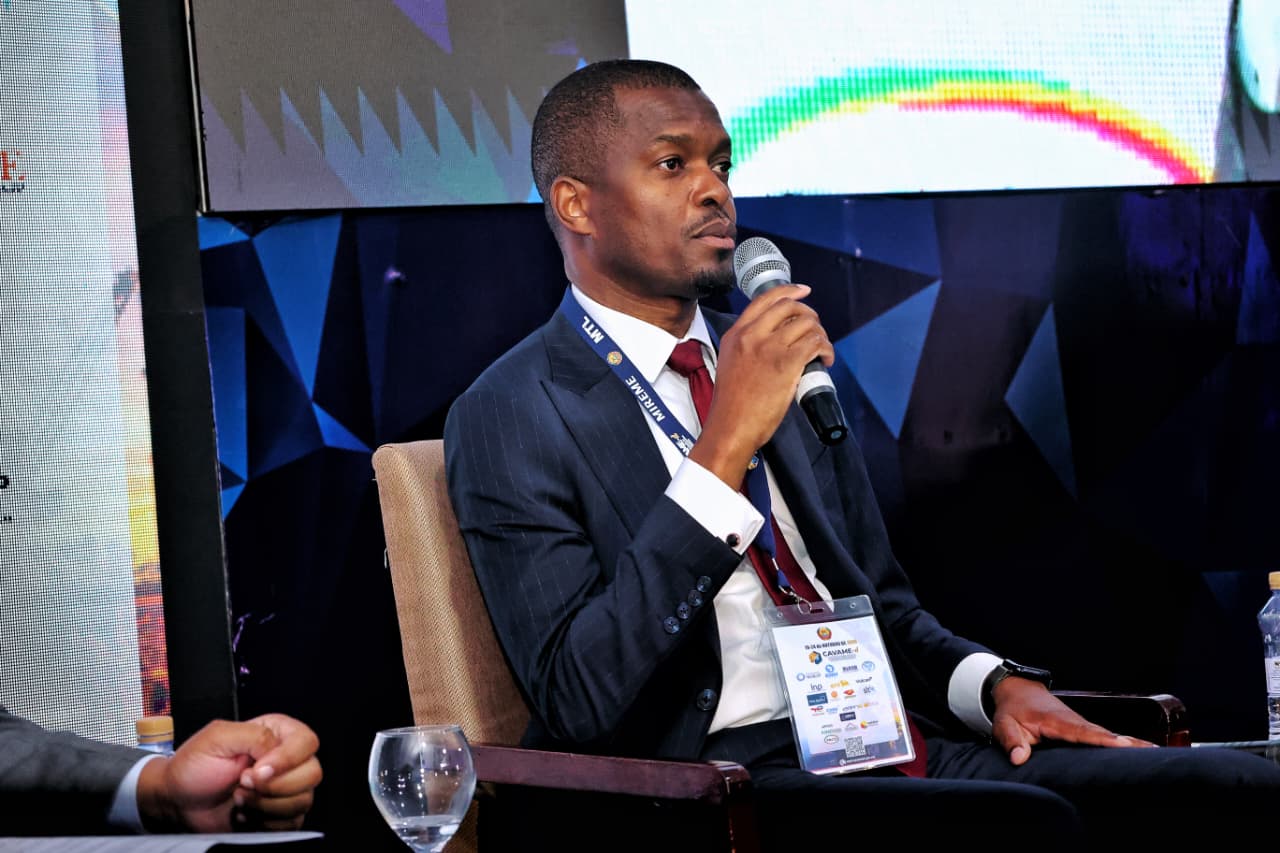
During the Meeting of Experts, where our country was represented by the Chairman of the Board of Directors of the INP and Executive Member of this Body, Mr Bangalane, it was reiterated the need for countries to strengthen cooperation relations and maintain a continuous dialogue, so that countries continue to promote the use of natural gas so that it continues to play a crucial role in global energy security and contribute to the economic and sustainable development of the member countries of this forum.

For experts, there is a need to ensure the "wider use of natural gas in national and international markets, especially as a strategic measure to combat energy poverty and achieve the Sustainable Development Goals", while encouraging the use of natural gas as a safe, reliable and essential source of energy for the energy transition as well as for the diversification of the energy matrix of member countries.

After the meeting, Nazário Bangalane said that "the GECF cooperation platform has been useful in that Mozambique has benefited from the exchange of experience of member countries in the process of exploration and use of natural gas as a source of transition energy".

In the margins of the Meeting of Experts, the GAS Research Institute (GRI – Gas Reaserch Institute) was inaugurated, an entity linked to the GECF that will assist member countries in research on the development of technologies for the natural gas industry. It was also launched the GACF Global Gas Outlook 2050, edition of 2023, which presents the prospect of demand for the use of natural gas by 2050, reinforcing the role of this hydrocarbon in the energy transition. According to this document, energy demand will grow by 20% between 2022 and 2050, estimating an increase in natural gas production by 3% annually on the African continent, reinforcing the importance of this resource in the coming decades in the supply of global energy demand.

The 7th Summit of Heads of State and Government of the GECF will take place on the theme "Natural Gas for a Safe and Sustainable Future" and will be attended by President Philip Nyusi.

It should be noted that Mozambique became an Observer Member of Gas Exporting Countries (GECF) in February 2022. This organisation serves as a platform for the exchange of experiences and information, with a view to strengthening cooperation relations between member countries and supporting member countries in the sovereign exploitation of their resources for the economic development and benefit of their peoples.

For more information, please contact the National Institute of Petroleum, located on Rua dos Desportistas No.259, Maputo, by numbers 21248300 or 839511000. You can also write to the email comunicacao@inp.gov.mz and visit our Facebook and LinkedIn pages to be up to date with this and other highlights.
Recent News

EnglishenEnglishEnglish

AREA 1

Following the 2nd open competition for the granting of areas for the research and production of hydrocarbons, the companies Anadarko Mozambique Area 1 and the National Hydrocarbon Company were awarded Area 1 in offshore environment of the Rovuma Basin. The area is located in the northern part of Cabo Delgado Province, in shallow to very deep waters. The Hydrocarbon Research and Production Areas Grant Agreement (CCPP) was signed on 20 December 2006 and is effective as of 1 February 2007.

PROSPERITY DISCOVERING AREA

Median estimate of 43 tcf (cubic foot trillions) of gas.

4 Transzonal Reservoirs:

  • Upper North Oligocene;
  • Upper South Oligocene;
  • Oligocene Lower;
  • Upper Eocene;

TUBARAN DISCOVER AREA

Median estimate of 3.4 (cubic foot trillions) Tcf of natural gas.

THE AREA OF DISCOVERMENT

Median estimate of 8.4 Tcf (cubulated foot trillions) of natural gas

The Paleocene Reservoirs.

THE AREA OF DISCOVERMENT

Tigris Shark Discovery Area (1254 km2), has 3 reservoirs of the Cretaceous (K1,K2 and K3), the K2 being the best in Orca and Shark-Tigre and has a median estimate of 0.323 Tcf (cubic foot trillions) of natural gas.

UNKNOWN TUGRE AND ORCA (CRETACICO LEQUE 1, 2 E 3), ROVUMA OFFSHORE AREA 1

The complete technical evaluation of the potential of the Cretaceous in Area 1, between the Areas of Discovery Tubarão Tigre and Orca, determined that it contains small, discontinuous and low quality reservoirs, and this would probably present significant challenges in the supply of trade amounts of gas. Of the three reservoirs of Cretaceous (K1,K2 and K3) evaluated, the best is K2 in Orca and Shark-Tiger that has an average resource of 0.323 Tcf (cubic foot trillions) of natural gas.

FOUND OUT ORCA (LECK OF MEDIO PALEOCEN), ROVUMA OFFSHORE AREA 1

This discovery was made in Area 1 by Anadarko in 2013 through borehole Orca-1, whose reservoir is the age of the Middle Paleocene, was subsequently evaluated by the holes Manta-1, Orca-2, Orca-3 and Orca-4.

The discovery is located about 10 km from the coast line, 250 km from the city of Pemba. This reservoir is of Middle Paleocene age and is not shared. The average estimate of resources is about 8.4 Tcf (cubulated foot trillions) of natural gas in situ, according to estimates submitted by Total.

The reservoir in the Orca discovery lies at depths ranging from 4000 to 5000m below the mid sea level, and the water column from about 600m to 1200m. The extension is about 30 km.

UNCOVERED TUBARON (EOCENO), ROVUMA OFFSHORE AREA 1

This discovery was made by Anadarko in January 2011 through the Jaw-1 hole and evaluated by the Shark-2 hole (negative) in 2013. The discovery is located about 25 km from the coast line, 50 Km of the Northeast of the district of Mocímboa da Praia and 200 Km of the Northeast of Pemba City.

The reservoir is completely in Area 1. The average estimate of resources is about 3.4 tcf (cubic foot trillions) of gas in situ.

The reservoir is at a depth of 3500 to 4000 metres below the average sea level. The water column ranges from 800 to 1200 meters. The extent of the Shark discovery is about 20 km east-oriented.